Phase One
Understand the problem
Participants establish a shared understanding of moral injury and examine a concrete operational case as a focal point for the psychological, moral, spiritual, and leadership dynamics involved.


A Moral Injury Prevention Symposium
Instead of waiting to identify and treat moral injury after it occurs, how might leaders and institutions prepare individuals beforehand to navigate experiences of profound
moral consequence?
Overview
It disrupts a person's sense of conscience, identity, meaning, and moral coherence. While moral injury has received significant attention over the past decade, and approaches to healing and treatment are increasingly explored, practical methods for preventing it remain nascent.1
The initiative grew out of the project director's work with Naval Special Warfare Leadership Education and Development (NLEAD), where the guiding question emerged: rather than waiting to identify and treat moral injury after it occurs, how might leaders prepare their people beforehand to navigate experiences of profound moral consequence?
The Longinus Project is an ongoing international symposium convening leaders, practitioners, and scholars to pursue that question—to examine how individuals and institutions can prepare for, navigate, and respond to experiences that place strain on these fundamental dimensions of the human person. The inaugural gathering focuses on military operational communities—specifically U.S. Naval Special Warfare. Future symposia will broaden the conversation to include law enforcement, firefighters and other first responders, emergency medical personnel, medical professionals, chaplains, and clergy, while also expanding participation among international partners.
The Name
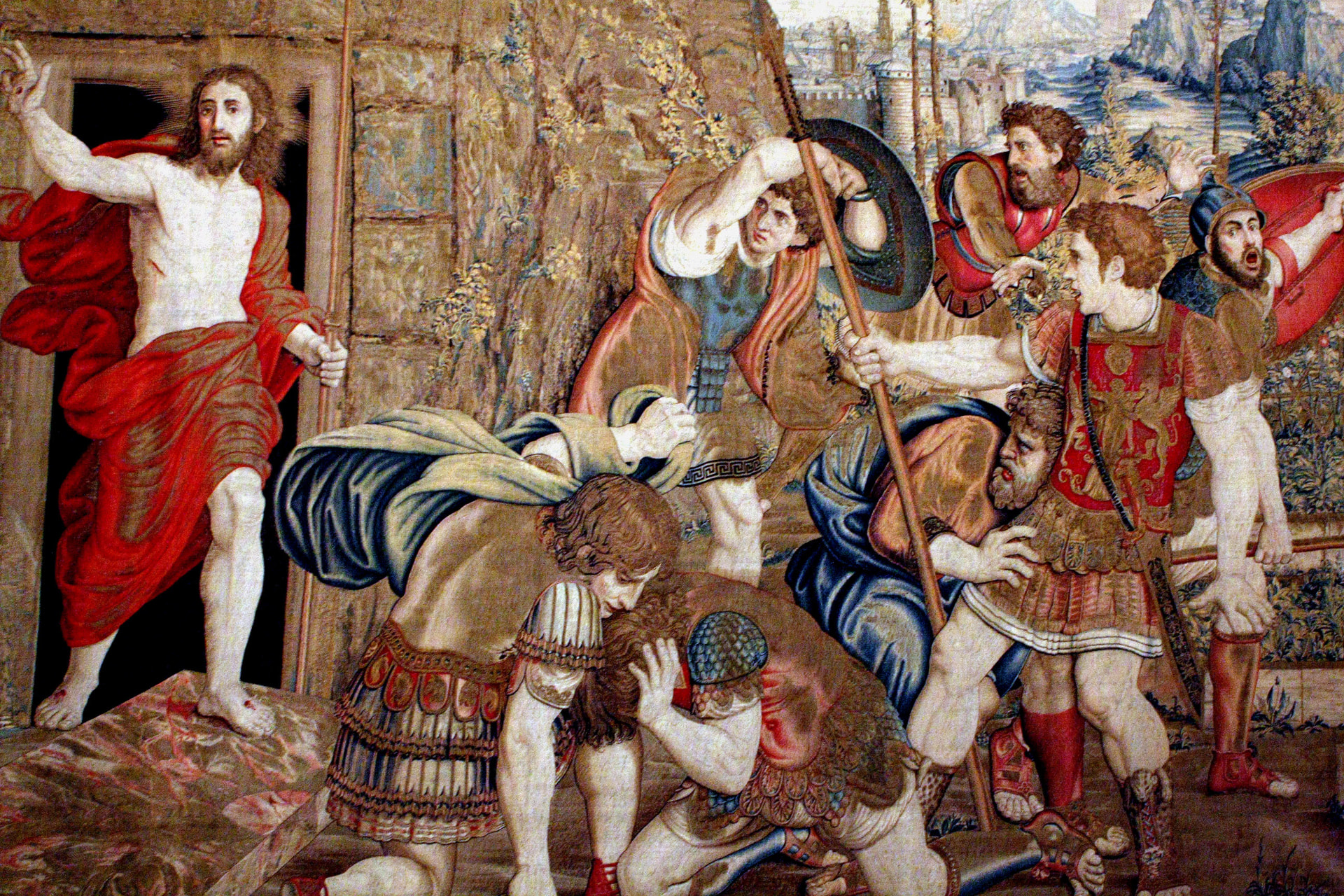
“The soldier who pierced the side of Christ came to recognize in the wounded man before him the Son of God.”
The figure of St. Longinus places at the heart of the project the encounter between violence and perception: the possibility that morally consequential action can become a moment not only of injury, but of deeper moral vision, integration, and transformation.
The 2027 Symposium
Phase One
Participants establish a shared understanding of moral injury and examine a concrete operational case as a focal point for the psychological, moral, spiritual, and leadership dynamics involved.
Phase Two
Operational experience enters sustained dialogue with psychology, Cognitive Behavioral Therapy, Stoic practice, philosophy, moral and sacramental theology, spirituality, and pastoral care.
Phase Three
The group examines how these resources inform formation, leadership, training, and clinical and pastoral care before, during, and after morally consequential exposure.
This small, high-trust environment is designed to produce practical results: concrete, transferable practices that operational leaders, clinicians, chaplains, theologians, and Church officials can adapt within the communities and institutions they serve—helping people prepare for, navigate, and integrate morally consequential experiences.
One example is cognitive hygiene—the disciplined examination of the perceptions, judgments, and interpretations through which people make sense of experience. Drawing upon Stoic practice and Cognitive Behavioral Therapy, cognitive hygiene helps individuals recognize how they are interpreting an experience before acting, while living through it, and afterward as they seek to integrate it.
Chaplains, theologians, and Church officials will contribute to this work by developing ritual, homiletic, liturgical, and spiritual resources that reinforce cognitive hygiene and sustain moral character. Practices of prayer, discernment, examination of conscience, sacramental life, communal worship, and pastoral accompaniment can help service members remain attentive to the moral meaning of their actions, recognize distorted interpretations, resist misplaced loyalties, and integrate difficult experiences within a coherent understanding of conscience, identity, responsibility, and hope.
The aim is not to add another procedural burden, but to remove friction from sound judgment and support operators through the full arc of moral decision-making. By training individuals to identify distorted assumptions, inherited narratives, and adversarial attempts to shape perception, cognitive hygiene helps keep the OODA loop—observe, orient, decide, act—clear under pressure. It also strengthens resilience against cognitive warfare by cultivating narrative intelligence: the ability to recognize, interrogate, and resist the stories being imposed upon an event.
The larger goal is not only to bring a service member home from combat physically intact, but morally intact as well—capable of returning to the fight if necessary, and capable of returning home with honor.
Case-Based Inquiry
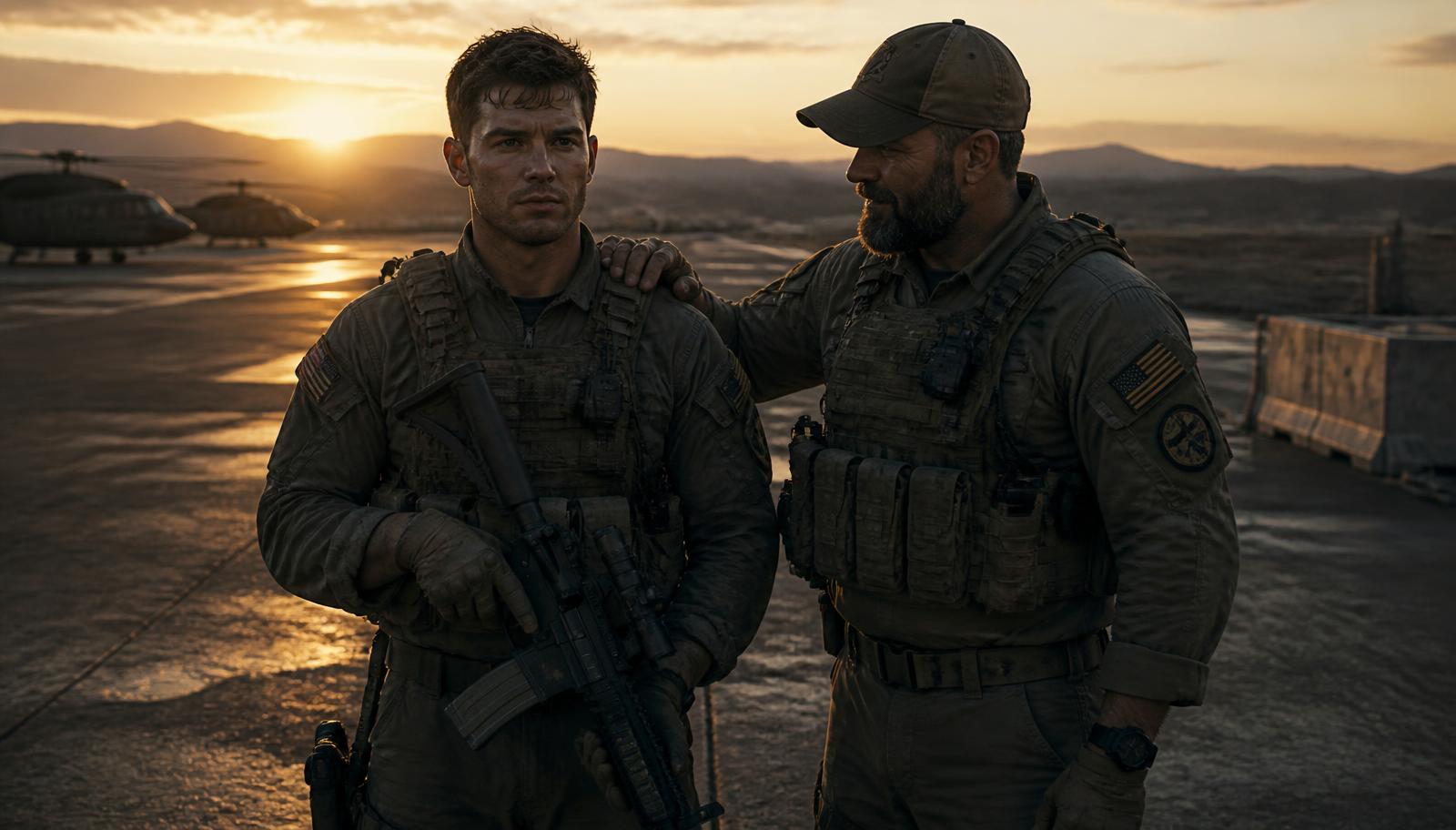
A central feature of the inaugural 2027 symposium is a sustained case examining how a senior enlisted leader might prepare and accompany an operator through a recognizable threshold experience. The case provides a concrete setting for examining judgment, emotion, conscience, responsibility, identity, meaning, leadership, and the human consequences of employing lethal force.
Operational effectiveness and moral seriousness need not be competing objectives. An operator can be prepared to employ force rapidly and appropriately when required while retaining a clear understanding of its moral gravity and the value of human life.
The inquiry extends across the full arc of morally consequential experience: formation before exposure, judgment and action during it, and interpretation and integration afterward. Although the first use of lethal force provides the focal case, the same framework applies to unintended consequences, witnessing the actions of others, betrayal by legitimate authority, and circumstances in which every available course carries significant moral cost.
A common concern is that moral formation will slow an operator down. The opposite is the aim: by rehearsing escalation in advance, the operator arrives at the correct action faster and stays in the fight longer.2 The work of judgment is done beforehand, so action is quick and the ground beneath it is sure; and because he has a disciplined way to carry the weight of what he has done, he remains effective through the missions that follow.
Practical Tools
Each tool we are going to build applies the discipline of cognitive hygiene at a distinct moment—before, during, and after morally consequential exposure.3
These tools exist today as prototypes—working frameworks developed in dialogue between operators and educators at Naval Special Warfare Leadership Education and Development (NLEAD), but not yet tested under the weight of shared operational experience or challenged by the insights of theologians, psychologists, philosophers, and chaplains. Over four days, those participants will pressure-test each one against the focal case and against their own experience: together they will walk the Moral Mission Assessment, Ethical Triangulation, and the Morally Informed AAR through the recognizable moments of a mission—briefing, contact, and debrief—identifying where each holds, where it breaks, and what a leader needs in hand to use it well.
Each discipline brings a distinct contribution to that work. The theologians test whether each tool holds against the deepest questions of conscience, guilt, and forgiveness. The psychologists map where moral strain enters the cognitive and emotional life of the operator. The CBT practitioners bring the disciplined attention to perception and interpretation that underwrites cognitive hygiene. And the operators keep every tool honest—what a leader can actually run in the time he has, with the people in front of him, under the conditions he will face.
What leaves the room is not a set of conclusions but a set of practices. Each tool is reduced to what a unit can actually run, documented in the idiom operators use, and built to be usable at every level of Naval Special Warfare—from the troop to the task unit and beyond.
The measure of success is simple: a leader who was not in the room can fold these practices into the routines his unit already runs, and use them to prepare his people before the next mission.
Before
Built onto Operational Risk Management (ORM)—not as a separate worksheet. The Navy already runs ORM before every mission: identify hazards, assess them, decide, and implement controls. Moral Mission Assessment adds a single question to that existing process: where, in this mission, does the weight of right and wrong fall? It introduces no additional paperwork—only the discipline of naming, in advance, the moral aspects an operator may be required to face, so that when the moment comes he is not meeting them for the first time.
1
Alongside the operational hazards already named in ORM, the leader identifies the foreseeable points of moral friction in the upcoming training or mission.
2
Each identified hazard is weighed—not for probability alone, but for moral gravity. Some outcomes are unlikely yet bear a weight that changes a person; the assessment names that weight honestly.
3
Risk decisions in ORM already weigh cost against benefit; the moral dimension asks whether the person is prepared—not merely permitted—to act. Where he is not, preparation closes the gap before the mission begins.
During
Ethical Triangulation defines a moral landscape bounded by Constraints, Consequences, and Character and structured along the axes of Risk, Responsibility, and Respect. Extraordinary operational conditions may legitimately expand the range of permissible action, but they do not eliminate its boundaries.
A navigator fixes his position by sighting three known landmarks. Ethical Triangulation applies the same discipline to moral terrain: three fixed reference points—Constraints, Consequences, and Character—by which an operator can locate himself, orient, and act under uncertainty, competing obligations, emotional pressure, and limited time. Most moral reasoning happens below conscious awareness; the framework makes that reasoning visible, shareable, and defensible.
Ethical Triangulation defines a moral landscape bounded by Constraints, Consequences, and Character and structured along three relational axes: Risk, Responsibility, and Respect. Extraordinary operational conditions may expand the range of permissible action without eliminating its boundaries.
C
The first landmark: duty. Rules, doctrine, law, and authority—the practical limits that can be known in advance, aimed at respect for law and respect for others.
C
The second landmark: probable outcomes. Looking to the horizon of possibilities in order to maximize the good achieved and mitigate the harm done.
C
The third landmark: personal integrity. “What does this say about me?”—the headline test, the Mom test, the stink test. It maximizes what the operator actually values and mitigates his own weaknesses.
“The purpose is not to produce identical decisions, but decisions an operator can explain. Being able to articulate your reasoning—and to elicit buy-in—builds unit cohesion, protects the team from harm and scrutiny, sustains the tactical advantage of the moral high ground, and lets a man sleep when the fins come off.”
After
Platoon leaders already conduct an After Action Review following any operation or training event. The same debrief can also attend to the moral meaning assigned to what happened, creating an opportunity to identify interpretations that may contribute to moral injury. The leader's role is not to be a therapist; it is to be a trusted teammate who creates the conditions for an honest debrief.
A
Under moral stress, the mind fills gaps with assumptions and assigns responsibility before the facts are known. Good questions slow the interpretive process, interrupt premature conclusions, and expose hidden assumptions.
A
Guilt, anger, grief, shame, betrayal, confusion, and numbness are common responses to extraordinary circumstances. Before a teammate can examine his interpretation, he needs to know he has been heard.
R
Reframing replaces an incomplete or inaccurate interpretation with one that is more accurate, complete, and sufficient. It is not positive thinking; it is the disciplined pursuit of the truest understanding of what happened—pressure-testing the first assessment rather than defending it.
Just as teammates inspect one another's equipment before a mission, they inspect one another's interpretations afterward. The event itself cannot be changed; its meaning, however, is often still being formed.
The Cohort
Why Rome
Rooted in the Jesuit tradition of rigorous intellectual inquiry, discernment, and formation, the Gregorian offers an environment in which the operational realities of moral injury enter into sustained dialogue with psychology, sociology, philosophy, moral and sacramental theology, spirituality, and the pastoral life of the Church.
Its international character allows the project to distinguish insights particular to American military culture from those transferable across cultures and professions. Rome provides purposeful distance from the operational environment; the Gregorian provides the reason for being there.
Pope Leo XIV
“Every day, each of you has the noble mission of defending the sovereignty of the Fatherland and the rule of law, ensuring the safety of your fellow citizens and protecting them from injustice.”
MoreLess
I would therefore like to repeat to you this exhortation from Saint Paul: “Be strong in the Lord. […] Stand therefore, having girded your loins with truth, and having put on the breastplate of righteousness, and having shod your feet with the equipment of the gospel of peace” (Eph 6:10, 14–15).
Be strong in the Lord, like the centurion who approached Jesus in Capernaum. He was well aware of the values by which you guide your lives: obedience, discipline, self-denial, loyalty, camaraderie, dedication, responsibility and courage. At the same time, that soldier felt a need for God; he knew that human beings are not self-sufficient, but aspire to something more, to something that transcends them.

From an Operator
“You train to do the impossible…But what nobody prepares you for is the guilt, the loss, or the grief that follows. That’s what moral injury is, it’s a wound to the soul. When you come home, the mission changes, but nobody teaches you how to survive that part.”
A Continuing Project
Successive iterations will extend this inquiry to other professional communities regularly exposed to potentially morally injurious events, enabling cumulative learning: approaches developed in one context can be tested and refined in another, while insights from those communities return to strengthen the settings from which the inquiry began.
Contact & Support
The inaugural symposium carries a total cost of $250,000, covering pre-symposium development, the four-day working symposium, assessment, prevention tools, and implementation. Grant and donor funds are administered through the Jesuit Community at Loyola Marymount University, providing an established structure for financial management and accountability. For inquiries about participation, donations, or partnership, please write directly.
Military & Program Inquiries
Project Director
Department of Philosophy, Loyola Marymount University
Chaplain, United States Navy
Financial & Logistical Questions
Rector and Superior
Jesuit Community, Loyola Marymount University